
Zum Hauptinhalt springen

EN

Kickstart your Technical File with the EU MDR General Requirements

{fastsocialshare}

On May 5th, the final texts of the MDR (Regulation EU 2017/745) and the IVDR were published in the EU Official Journal

It's quite a chunk of text and if you have not yet started to update your Quality Management System, SOP:s, and Technical Files, you should (seriously!) take some to plan these actions accordingly.
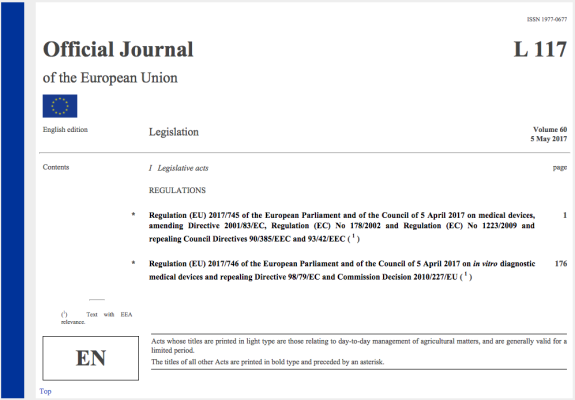
 MDRJournal

The EU MDR Annex I General Safety and Performance Requirements section corresponds to the Essential Requirements section in MDD Annex I.

If you want to check how your current Technical Files complies with these requirements, you can download our checklist here:

MDR (EU 2017/745) Annex I General Safety and Performance Requirements Checklist

The MDR Annex I General Requirements are also available to Aligned Elements users as a free extension. This means that the MDR Annex I Requirements can be imported as Design Control into any of your Aligned Elements projects and included in the traceability. The extension corresponds to the requirements in the 37 page checklist and is made readily available in your traceability in a matter of seconds!

The MDR Annex I General Requirements extension is yet another of the many available free extensions available to Aligned Elements users which helps them accelerate their medical device Design Control documentation effort. Browse through the available extensions and discover how they could accelerate your project.

The extension is available here: MDR (EU 2017/745) Annex I Extension

Aligned Elements V2.4 SP 1 released

With the Aligned Elements V2.4 Service Pack 1 (2.4.132.12658) we have fixed a small number of bugs.

This service pack mainly addresses known problems with Word 2010 and Word 2007 from Aligned Elements V2.4.

It also provides fixes to the integration mechanisms with Countersoft Gemini and the usability of Test Runs.

If your team is using Word 2010 or Word 2007, you are recommended to upgrade to this service pack.

How to document a powered Exoskeleton according to the FDA

{fastsocialshare}

A few years ago we could read articles claiming "Exoskeletons will one day replace wheelchairs". That the FDA regulates these kinds of devices is a clear sign that they are about to enter the mass market.

Miniaturization of electronics, a steep drop in manufacturing costs of mechatronic parts, increased computational power, more powerful batteries. A number of recent technical developments converge into the realization of exoskeletons growing nearer and nearer.

In this rapidly expanding field, competitors are scrambling to put their new models onto the market.

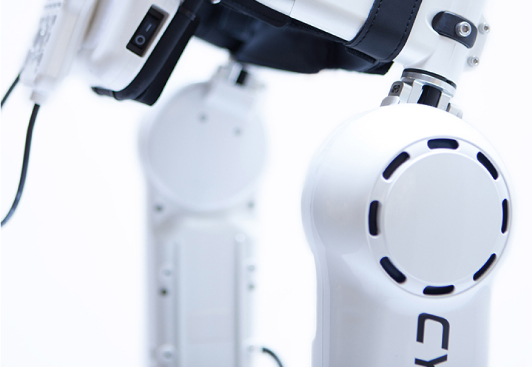
exoskeleton

In the beginning of 2015 FDA announced that power exoskeletons will be classified as Class II devices with Special Controls, which clarified the regulatory situation for these kinds of wearable devices. Special controls have been put in place to address a number of risk factors identified by the FDA to be associated with the usage of powered exoskeletons.

For those used to medical device development, both the risks as well as the suggested requirements are straightforward. They include among other things, thermal and electric safety, biocompatibility, and the obvious risk of falling to the ground.

To help exoskeleton manufacturers getting up and running with their documentation, we provided the Aligned Elements Exoskeleton Extension Package containing:

  • 9 Potential Hazards (including mitigation strategies) outlined as exoskeleton associated risk factors by the FDA
  • 38 exoskeleton Special Control Requirements deduced from 21 CFR Part 890 Docket No. FDA-2014-N-1903

This will give manufacturers a predefined starting point of setting up their Design History File with the intention of accelerating the documentation effort.

The Aligned Elements Exoskeleton Extension Package is downloadable here: Aligned Elements Exoskeleton Extension Package


Digitization of the Med Tech Industry

{fastsocialshare}

2016 seems to become the year when it all comes together. The traditional domination of hardware and pharmaceuticals is being caught up by health-through-information.

With wearables becoming a commodity, the 5G standard approaching fast, enabling a revolution in IoT communication, health apps, electronic handling of prescriptions, and patient dossiers, health becomes more and more about collecting, analyzing, and acting on data.

E Health Data

The digitization of medical device products will have a profound effect on the way the industry conducts business and generates growth.

However, according to McKinsey, medical device companies have been slow to adopt, not necessarily when it comes to what they produce but rather how they produce it. I am often surprised to see how the digitization of the medical devices themselves rarely is matched by an equal digitization level of the development processes.

Ironically, the medical device industry, with its well-known dilemma of being required to provide high-quality innovative products in a regulated market is an exceptionally good candidate for process digitization.

The documentation requirements on a medical device manufacturer are both growing and changing, forcing the development effort to become increasingly focused on the paper trail. 

For safety reasons, compliance rightfully requires each step and decision to be carefully recorded. Even though being a just and fair requirement, the operational reality of such a process unrelentingly divides the attention of a professional R&D workforce from innovation to administration. A traditional paper-based approach is simply not up to the task of managing the interconnected nature of the DHF. 

Digitizing the development documentation process and rely on a unified repository for the design history file management will not only increase the efficiency of the work and free up valuable innovators from menial documentation tasks. It also makes it possible to automatically analyze and verify the completeness and consistency of the DHF artifacts, increasing the quality of output.

With a medical device ALM like Aligned Elements, allowing the digitization of work practices and document handling, the medical device manufacturer will match the innovation of his products with the efficiency of his processes.

Aligned Elements supports facilitating capabilities like:

  • Electronically sign and release document
  • Automatically route documents according to a workflow process
  • Push released documents to external systems
  • Collaborate on the documentation creation, management, and review
  • Perform real-time consistency checks at any time
  • Synchronize documents and generate traceability tables with a single click

Read more about Aligned Elements here.

Aligned Elements V2.3 Service Pack 5

What's New

Performance Improvements

This release brings a host of performance improvements, making Aligned Elements data load faster and make your day-to-day work a lot smoother. Quicker loading of the Trace Explorer content and Project explorer books will allow you to concentrate on the more important tasks at hand.

icon-stopwatch-blue-big


Usability Improvements

Use drag and drop to add images and files to the Rich Text and Table attributes. Use menu quick links to add symbols to your texts. Use key-combinations to get your preferred AE hyperlink content. Fewer clicks to accomplish your daily documentation tasks.

DragAndDrop


Improved Signing Experience

List your pending signature tasks with a single click. Electronically sign single or multiple documents with a simple point and click. 


images


What's changed

  • Web client Clear Suspect Traces support added
  • Web client Synchronization of Word files support added
  • Expanded Double attribute options
  • Expanded Copy To File workflow options


Upgrade Now

With more than 60 enhancements, fixes, and usability improvements, this release is a recommended upgrade.

Find the installer to Aligned Elements V2.3 Service Pack 5 here.

Hotfix Aligned Elements V2.3 SP 4 released

With the Hotfix Aligned Elements V2.3 Service Pack 4 (2.3.52.11241) we have fixed a small number of bugs.

Note that these issues do not pose any danger to the data integrity of the projects. It is only a matter of fixing performance and usability issues that have a negative impact on the Aligned Elements user experience.

Aligned Elements V2.3 Service Pack 3


What's New

Cloud Deployment

If you don't have the required skills and resources for installing and managing your own IT infrastructure and software, consider using Aligned Elements' cloud option. With a cloud option, you can get up and running quickly while simultaneously keep down costs for IT infrastructure and reduce deployment risk. 

Cloud


Fast and Flexible Word Reports

Create and update Word reports even faster. Generate template-based Word reports on-the-fly with customized look and feel, create and populate Word documents with two simple clicks or update your documents with the latest database changes without even opening Word!

print2


Simple signing with electronic signatures

Collecting document signatures is a final mandatory step when compiling medical device development documentation. A simple but often tedious action since finding the right signees at the right time can be a challenge in today's dynamic environment. Use Aligned Elements e-signatures to send e-signature invitations to the signees. They are just two clicks away from completing their signature.


sign3


What's changed

  • Web client Display Snapshot support added
  • Web client Word document creation and synchronization added
  • Web client Electronic signatures added
  • Web client Batch editing support added
  • Web client Export functionality added
  • New Project information placeholder 
  • Absolute mitigation reduction calculation
  • Support for Word 2016
  • Support for Windows 10


Upgrade Now

With more than 100 enhancements, fixes, and usability improvements, this release is a recommended upgrade.

Find the installer to Aligned Elements V2.3 Service Pack 3 here.

Video Recordings from Sharpen Your Skills 2025 - Part 2

{fastsocialshare}

Thank you very much for joining us for this Sharpen your Skills 2025 Part 2 session!

Find the recordings of the four expert sessions below. See you again in the fall!

Session Recordings

When ‘Guidance’ Isn’t a Suggestion: Hard Truths on FDA Software & Cybersecurity Compliance

Presented by: Paul Gardner, Head of Development, Ypsomed Selfcare Solutions

Efficient design control in risk management: an FDA audit meets database logic


Presented by: Udo Warschewske, COO, Senior Consultant, MBA, Tecurat

From Algorithms to Authorisations - Demystifying AI/ML Device Approval

Presented by: Richie Christian, Senior Medical Device Consultant, Wega Informatic AG

Efficiency Through Reuse: Eliminating Duplication in Design Controls

Presented by: Anders Emmerich, CEO, Co-Founder Aligned AG

Online Seminar for Medical Device Development - Sharpen your skills 2025 - Part 2

  • Written by

  • on

  • . Posted in

Sharpen Your Skills 2025

Tuesday October 21st, 2025 | 14:00 - 16:00 CET 

How to efficiently develop Medical Devices for compliance

Is it even possible?

Join our event! Concrete and practical advice on how to meet common and urgent medical device development challenges.

Benefit from meeting our group of experienced industry experts who share their latest best practices.

[rocket]

Register today to reserve your seat!

Register on Linked In below. For questions, Diese E-Mail-Adresse ist vor Spambots geschützt! Zur Anzeige muss JavaScript eingeschaltet sein.

Sign Up!

Key Learning Objectives

When ‘Guidance’ Isn’t a Suggestion: Hard Truths on FDA Software & Cybersecurity Compliance

This session will share key software and cybersecurity lessons learned from a recent FDA 510(k) submission, with a focus on the agency’s evolving expectations for documentation and detail.

I will highlight how FDA “guidance” often translates into mandatory, compliance-critical requirements that must be addressed to achieve clearance.

Attendees will gain practical insights to better align R&D and RAQA efforts with current regulatory expectations, avoiding surprises and delays.

Speaker: Paul Gardner, Head of Development, Ypsomed Selfcare Solutions

Efficient design control in risk management: an FDA audit meets database logic

Inconsistencies in design control are one of the main reasons for critical audit findings. My experience of a somewhat challenging FDA audit has taught me that, with the correct data structure in place, straightforward logical checks can effectively identify most of these weaknesses in advance.

My approach automates these checks for the entire dataset. Using risk management as an example, this presentation shows how such models can be used to increase development efficiency while ensuring audit security.

Speaker: Udo Warschewske, COO, Senior Consultant, MBA, Tecurat

From Algorithms to Authorisations - Demystifying AI/ML Device Approval

What are the key factors to address in an AI/ML device submission?
• Transparency with respect to AI/ML performance and data used to train / validate the model.
• Using best available methods for reference dataset
• Ensuring generalizability to the intended patient population
• Post-market considerations with respect to monitoring AI/ML performance and regulatory oversight

Speaker: Richie Christian, Senior Medical Device Consultant, Wega Informatic AG

Efficiency Through Reuse: Eliminating Duplication in Design Controls

In medical device documentation, you are faced with the promise and dilemma of Design Control reuse sooner or later. Re-using existing data seems like an obvious choice. On the surface, it saves work and speeds up development.
But today's most favoured re-use option (Copy Paste) is a blessing in disguise.

How can real Design Control re-use be achieved with modern digital tools? In this session, we'll explore the use of centralized, curated Design Control libraries as a single-source of truth for properly reused content across multiple projects with full traceability.

Speaker: Anders Emmerich, CEO Aligned AG


Time and Place

  • Date: Tuesday, October 21st
  • Time: 14:00 - 16:00 CET
  • Live Streamed from the Aligned HQ. The Teams link is on the Linked In Event page.

Presentations are held in English.

Target Audience

This event is aimed at medical device development professionals, project managers, QARA professionals, R&D personnel, and other industry professionals engaged in medical device development.


About Aligned AG

Aligned AG provides Aligned Elements, a Medical Device ALM system that accelerates and ensures compliant Design Control documentation for medical devices. We assist our clients in developing regulatory compliant products within shorter time-frames, to lower costs and with higher confidence.

[rocket]

Register today to reserve your seat!

Register on Linked In below. For questions, Diese E-Mail-Adresse ist vor Spambots geschützt! Zur Anzeige muss JavaScript eingeschaltet sein.

Sign Up!

About the Author

Weiterlesen

Video Recordings from Sharpen Your Skills 2025

{fastsocialshare}

Thank you very much for joining us for this Sharpen your Skills 2025 session!

Find the recordings of the four expert sessions below. See you again in the fall!

Session Recordings

Adapting Your Regulatory Strategy Amid U.S. and FDA Instability

Presented by: Jurjen Zoethout, Senior Partner, Lucendra MedTech Consulting

Managing non-redundant work items within the digital thread:
An example of a Risk Management System at Karl Storz


Presented by: Martin Schroeder, Senior Risk Manager, KARL STORZ SE & Co. KG

Practical post-market surveillance under the MDR/IVDR

Presented by: Camilla Messerli, Head Quality Management & Regulatory Affairs, Effectum Medical AG

Digital Usability Engineering and Risk Assessments:
Practical examples using a Medical Device ALM

Presented by: Karl Larsson, Managing Director, Aligned AG